At Wellthy, caregiving support is designed to meet families wherever they are, across countries, cultures, care systems, and life stages. As Wellthy’s global footprint continues to grow, our Care Team helps employees and their loved ones navigate care with the same combination of compassion, structure, and problem-solving that defines Wellthy everywhere we work.
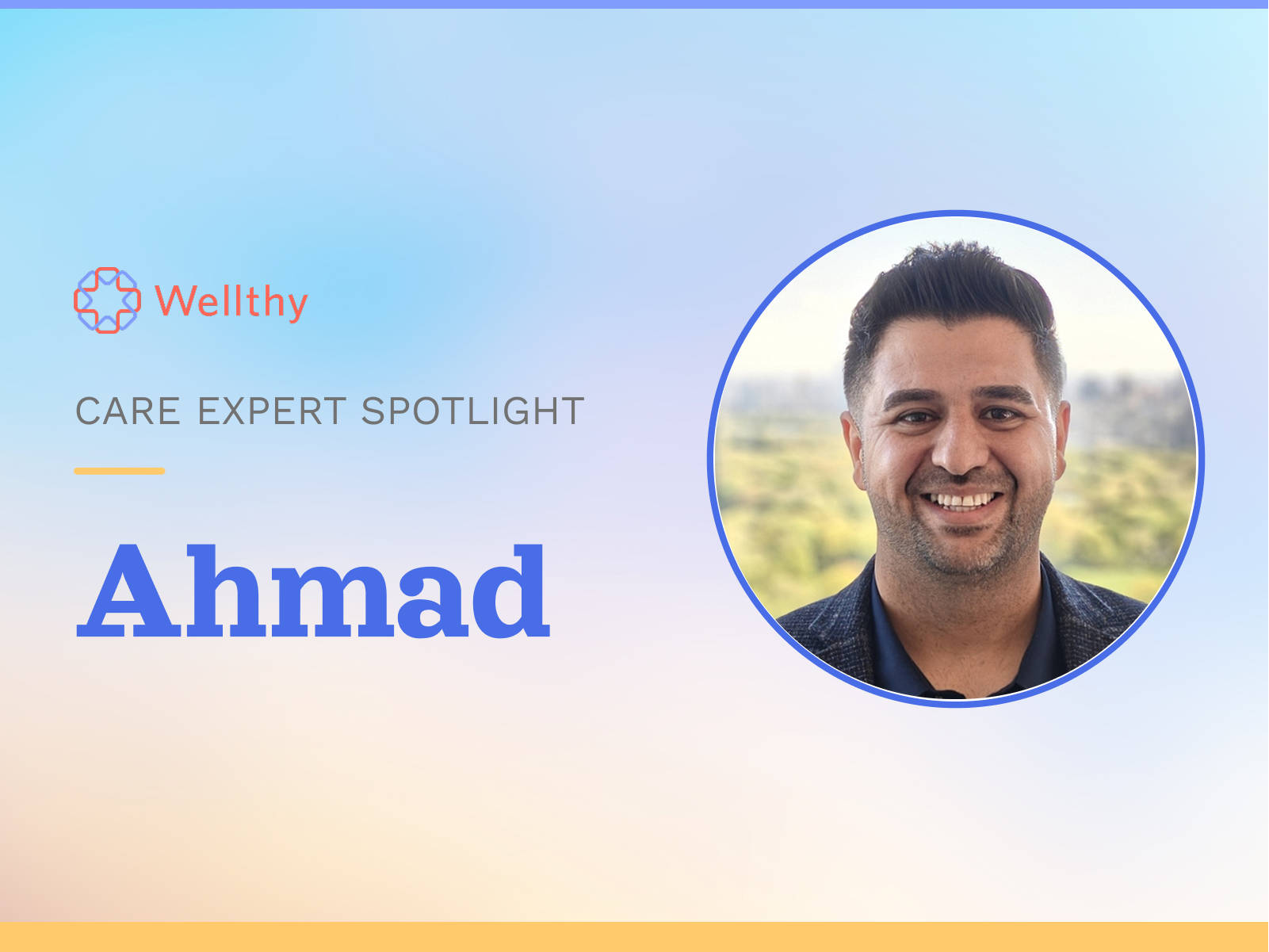
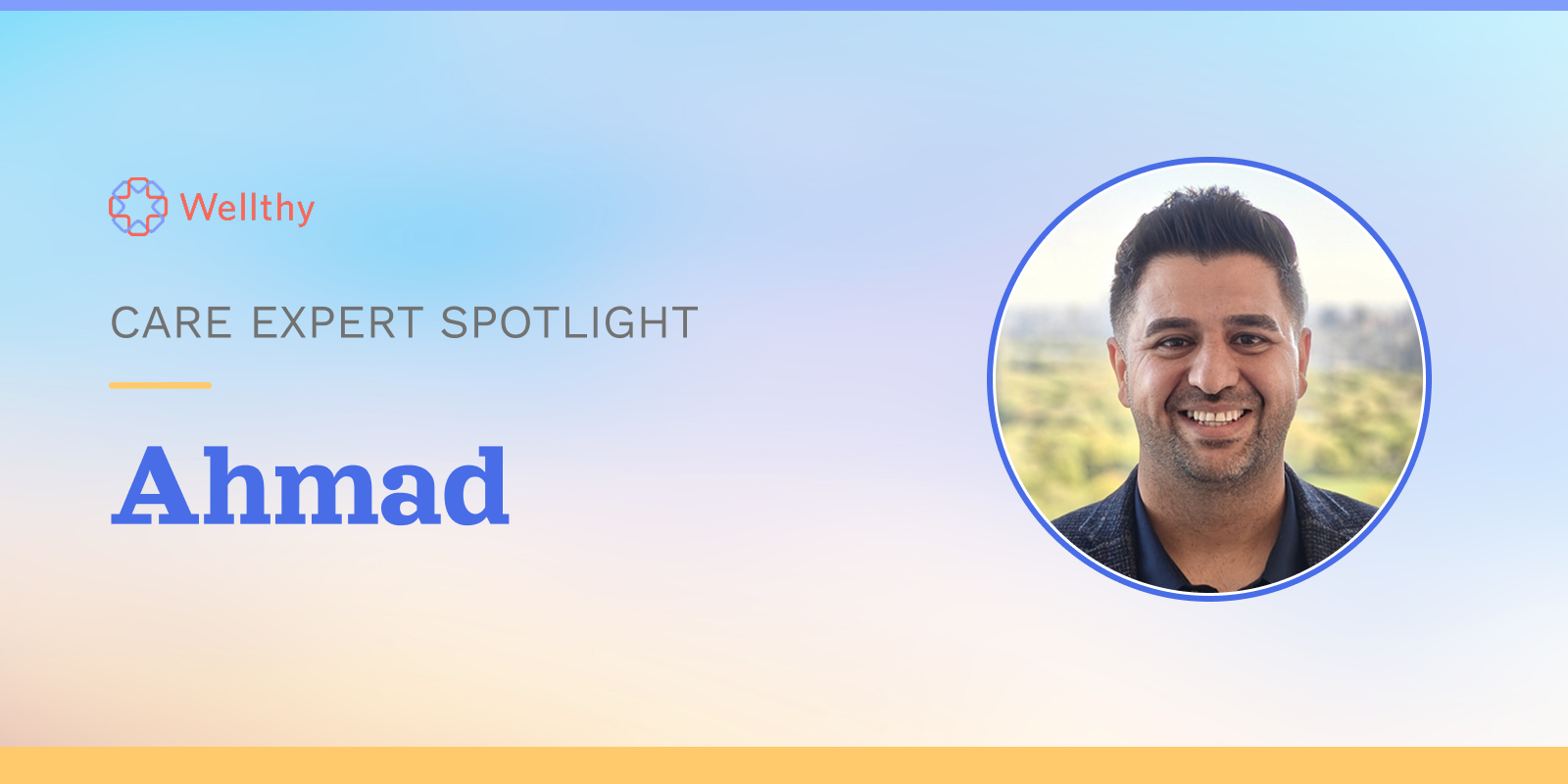
This month, we're spotlighting Ahmad, a Global Care Manager on Wellthy's Care Team. Ahmad brings a sharp, solutions-oriented lens to supporting families through complex care moments, and a deep appreciation for the cultural nuance that shapes how care actually plays out around the world.
In the conversation below, he shares what drew him to this work, what surprised him about caregiving across countries and cultures, and how Wellthy helps families find clarity when care feels anything but simple.
Tell us a bit about your journey and what led you to the work you're doing now at Wellthy?
My background is mainly in clinical trials. In my previous role, I worked in clinical trials for seven years, managing day-to-day operations, and I was also head of audit, so I’ve always had an eye for identifying problems and finding ways to solve them.
I think my background has always been centered around supporting people through complex situations and helping create structure during stressful moments. Over time, I found myself increasingly drawn to work that combines problem-solving with genuine human impact.
That is what really attracted me to Wellthy, the mission and the opportunity to support families as they navigate care challenges that are often emotional, complicated, and sensitive. Talking to people across the organization and understanding why everyone is so passionate and transparent gave me a real sense that Wellthy is committed to solving problems in a way that truly impacts people’s lives.
The global side of the work is especially meaningful to me. There is a unique layer of complexity when people are trying to coordinate care across different countries. Some of our Care Coordinators work with members who are based in the U.S., while their family members are based in India. That means navigating completely different time zones, systems, and expectations. Being able to help solve those problems for families is incredibly meaningful.
Care doesn't look the same in every country, and neither does the family structure around it. What have you found surprising about how caregiving plays out in different parts of the world?
The standard of care, structure of care, and care systems can be quite different across countries and continents. But one thing every care project has in common is the emotional side of caregiving.
Everyone is emotionally connected to a care project in some way, whether that is the care recipient, the family member, the Care Coordinator, or even us as Care Managers.
What changes are often the expectations around who provides care, how openly families discuss it, and what resources are available. In some families, people naturally take on more responsibility themselves. In others, families are more likely to look for outside help and support.
It makes you appreciate how important cultural understanding is in the work that we do. There is no one-size-fits-all approach. Even within the U.S., different states and communities may have very different cultures around care. In some places, families may be more hands-on, and Wellthy may play a different kind of role. In others, people may be extremely busy with day-to-day life and work, and they simply cannot take that extra time to provide care for a family member in need.
That is where our role and our contribution to their life, and their family’s life, becomes really important.
When a family is coordinating care across borders — say, an adult child in one country supporting an aging parent in another — what tends to be the hardest part, and where do you see Wellthy making the biggest difference?
I think one of the hardest parts is the feeling of distance and lack of control that families experience when they are trying to support a parent, loved one, or even a child from another country.
A very simple task or need for that family member can become very complicated. There may be language barriers, unfamiliar healthcare systems, legal differences, and time zone challenges. And all of that is usually happening during an already stressful and emotional time.
Where Wellthy makes a real difference is by bringing clarity, coordination, and solutions to a situation that can otherwise feel very overwhelming. Sometimes just knowing there is someone who is able to do something for you in a different country — and treat it as their own problem — can mean a lot and change a lot of things.
That is what we bring to people as an organization. We treat them like they are our family members.
Tell us about Wellthy’s global Care Team — who they are, what they do, and what you think sets them apart in this kind of work.
What has impressed me most so far is their collaboration, creativity, and genuine investment in people. There is a real balance between empathy and excellence.
The work requires people who can think critically. For example, if you have a care project in China and a Care Coordinator is navigating the healthcare system there, they need the ability to analyze the situation, create a plan, and then execute it.
But the human side of the work is just as important. Families need to feel supported and understood, and I think that combination is quite rare.
The global aspect also means the team brings different perspectives from different cultures. They understand local languages, healthcare systems, laws, and regulations, which is incredibly valuable when supporting families across borders.
There are examples in China, India, the UK, Ireland, Poland, Germany — we help people globally. That combination of human support, cultural understanding, and critical thinking is what makes the team unique.
Global care cases often have a lot of moving parts across countries, systems, and family members. What does your team do to make that feel manageable for the families you support?
A big part of the global team’s role is creating structure and reducing uncertainty for families.
Families are often trying to manage multiple responsibilities at once. Even having someone coordinate information, outline next steps, and proactively manage communication can make a huge difference.
Our role is really to simplify complexity wherever possible. When someone is going through a difficult situation and does not know what to do, we come in, coordinate the information, reduce the complexity, and create a plan to help them move forward.
That might mean navigating systems, identifying resources, or helping families feel more informed and supported throughout the process. These are the things we can bring to families to help them through a very difficult moment.
As Wellthy's footprint continues to grow internationally, what's one thing you wish more employers or benefits leaders understood about supporting a globally distributed workforce through caregiving moments?
I think more employers are starting to recognize that caregiving affects every part of a person’s life, including their ability to be fully present at work. If your mind is distracted by the caregiving needs of a loved one, your energy and focus are not 100% where they should be. You are there, but you are not fully there.
For global employees especially, caregiving can become even more complex when they are supporting loved ones from a distance or across time zones. Imagine waking up in the middle of the night to support a family member in another country, then trying to show up fully for work the next day. That balance becomes very difficult.
That is why meaningful caregiving support is so important. It is not only beneficial for employees personally; it has a real impact on wellbeing, retention, and overall engagement. When people feel supported during difficult moments, they develop a sense of trust and loyalty toward the organization. It is almost like, if you hold my hand during a difficult time, I will never forget to hold yours when you need me most.
That is what makes Wellthy’s model so unique. We help reduce stress, create solutions, and put options on the table, so employees can focus on the task at hand rather than trying to navigate care alone.
I have come across people who have left jobs because of family complexity or challenges navigating healthcare or social care. When an organization has invested six or seven years into developing someone’s talent, and then loses them because they did not have the right support during a caregiving moment, that is a huge loss. A benefit like this can help retain that person and support them through one of the most difficult moments.

Similar Articles